

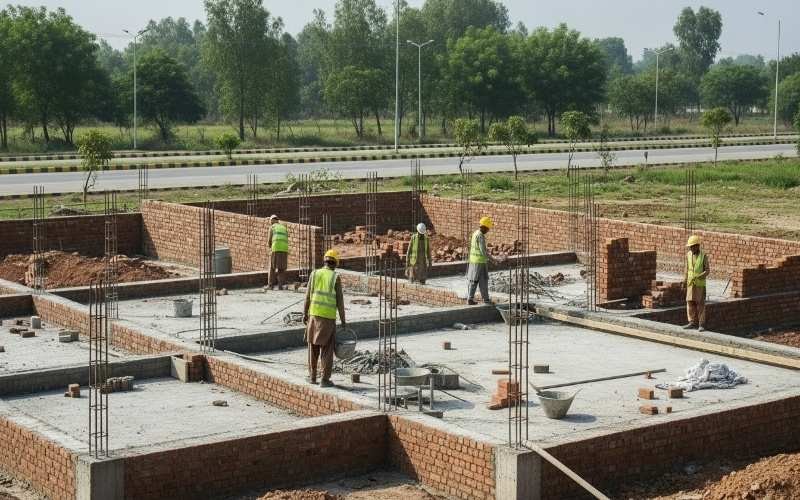
New Home Building Process in Islamabad Pakistan Step by Step
Building a new home in Islamabad can feel tricky if you don’t know the steps. The new home building process Islamabad makes it easier when you understand what comes first and what comes later. From choosing the right plot to handing over the finished house, every step matters.
In simple words, the step-by-step house construction process in Pakistan usually starts with planning and approvals, then moves to foundation and structure, followed by plumbing, electrical work, and finally finishing touches. Knowing the house construction timeline Islamabad helps you plan your budget, avoid delays, and make smart choices along the way.
By following a clear process, you can manage your project smoothly and get your home ready without unnecessary stress.
Planning Your New Home Build
Before you start building, proper planning makes everything easier. Budget planning for residential construction in Pakistan is the first step. You need to decide how much you can spend, the size of your house, and the style you want. For example, building a 5 Marla home is different from a 10 Marla home. Each size has its own cost and material needs.
1. Define Your Goals and Budget
Setting your goals helps you stay on track. Think about the number of rooms, the type of kitchen, and the layout you want. Your budget will guide your choices. For example, building in Bahria Town may cost more than sector F-11 due to land prices. When you know your budget, it’s easier to pick the right materials and avoid surprises later.
2. Choose the Right Plot
Picking the right land is very important. Look at the soil quality, flatness, and location. Make sure the area has water, electricity, and good roads. Here’s a simple comparison of popular Islamabad sectors and average land prices:
| Sector | Average Land Cost (PKR/sq ft) |
|---|---|
| Bahria Town | 5000 – 7000 |
| F-11 | 4000 – 5500 |
| G-13 | 3500 – 5000 |
| I-10 | 3000 – 4500 |
Soil testing is also important to ensure your house is safe and stable. A good plot makes the rest of the house construction steps in Pakistan much smoother.
3. Hire Your Design & Construction Team
You’ll need an architect, structural engineer, and contractor to help with the build. Choose people who have experience and a good track record. Tip: Check previous projects before hiring. They should understand local rules and the house construction steps in Pakistan.
A clear plan, the right plot, and an experienced team set the foundation for a smooth build. With proper planning, you can avoid delays and make smart decisions at every stage.
Obtaining Permits and Legal Approvals
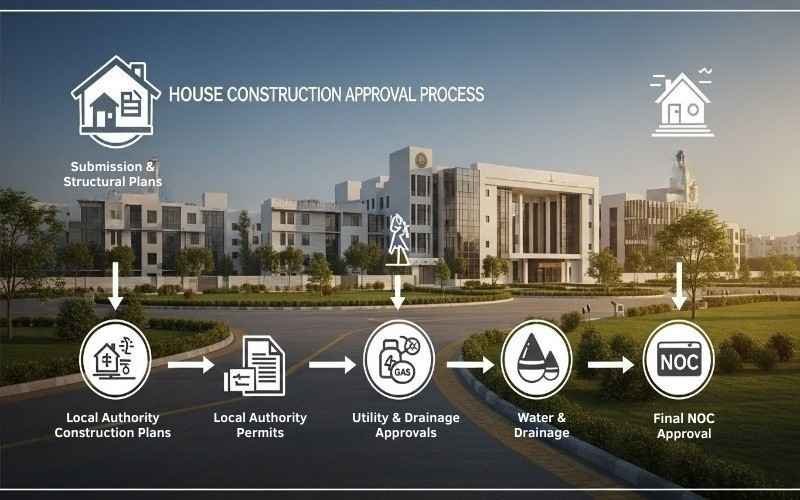
Before you start any construction work, you need the right approvals. Without them, your project can face delays or fines. The CDA building plan approval process Islamabad is the main step for legal permission. You also need other local authority construction permits Pakistan to make sure your house follows the rules. Getting these approvals early keeps your build on track and avoids problems later.
1. Submit Architectural and Structural Plans
The first thing is submitting your house design to the local authorities. You will need architectural drawings, structural plans, and a site layout. This is part of the house construction approvals Islamabad process. Make sure your plans match the local building rules, including setbacks and height restrictions.
2. Get Utility and NOC Approvals
After your design is approved, you need approvals for utilities. This includes electricity, gas, water, and drainage connections. NOCs (No Objection Certificates) from relevant departments are essential before starting construction. It ensures that your house will be connected to all necessary services without issues.
3. Common Delays and How to Avoid Them
Many delays happen because of incomplete documents or late submissions. The best way to avoid this is to prepare all documents in advance. Hiring a professional who knows the CDA building plan approval process Islamabad can save a lot of time. Submit your applications early and follow up regularly to stay on schedule.
Foundation and Structural Work
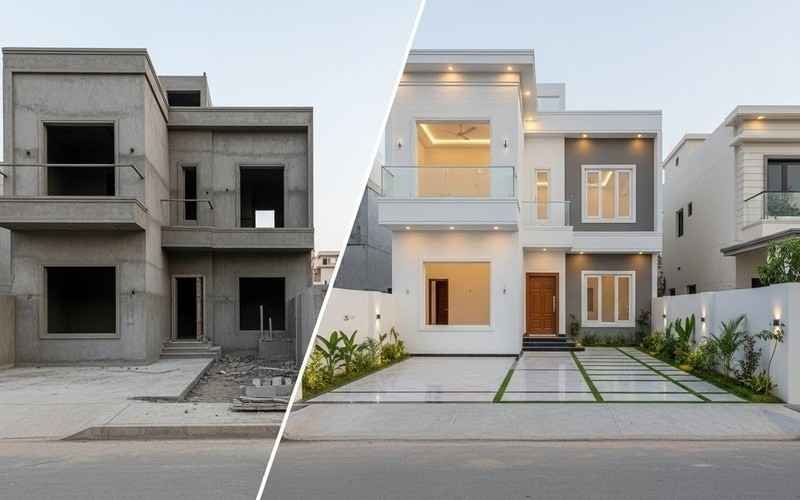
Once you have your approvals, the next step is the actual building. The foundation to finishing house construction stages start with preparing the site and go all the way to the roof and walls. Doing this carefully ensures your house is strong and safe.
1. Site Preparation
The first step is getting the plot ready. This means clearing the land, leveling it, and marking the layout. Proper site preparation makes the next steps easier and avoids mistakes. Checking the soil is important too. Soil testing Islamabad helps you know if the land can safely support your house.
2. Laying the Foundation
Next comes the foundation. This includes footings, reinforcement bars, and waterproofing. The foundation is what keeps your house stable, so it must be done right. For example, in Islamabad, the rainy season can delay concrete curing if it’s not planned properly. Using quality cement and proper techniques is key to a strong base.
3. Superstructure Construction
After the foundation, the superstructure is built. This includes RCC columns, beams, walls, and roof slabs. Choosing good materials is critical. The strength of your residential building structure Pakistan depends on the quality of cement, bricks, and workmanship. Take your time to check each stage before moving to the next.
Following these steps carefully keeps your construction on schedule and ensures your house will last for years.
Installing Mechanical, Electrical, and Plumbing (MEP)
After the structure is ready, the next step is installing the systems that make a house livable. The MEP installation steps in residential construction Pakistan include plumbing, electrical wiring, and HVAC systems. Doing these steps correctly now saves a lot of trouble later.
Key MEP Steps
1. Plumbing Rough-in: Pipes for water supply and drainage are installed before plastering. For example, you can run gas lines along walls before plastering to avoid later repairs. This is part of proper plumbing rough-in Pakistan.
2. Electrical Conduits and Wiring: Conduits are placed for electricity, internet, and TV cables. Planning the layout carefully makes the house wiring process Islamabad smooth and safe.
3. HVAC Ducting: Air conditioning and ventilation ducts are installed at this stage if your house will have them.
These steps should be checked carefully before moving to finishing. Mistakes now can cause big repairs later. Following the right MEP installation steps in residential construction Pakistan ensures everything works perfectly when your home is ready.
Interior and Exterior Finishing
Once the MEP work is done, it’s time to make your house look like home. The interior and exterior finishing process in Pakistani homes includes walls, floors, doors, windows, painting, and outdoor work. Doing this carefully gives your home a polished and modern look.
1. Plastering, Flooring, Doors, and Windows
The first step is plastering the walls. After that, floors are installed. You can choose tiles, marble, or other materials depending on your budget and style. For example, many homes in Islamabad use marble in the living room and tiles in bedrooms to save cost. Once floors are done, doors and windows are fitted to complete the basic structure.
2. Painting and Decorative Finishes
Next comes painting and decorative work. Interior painting, false ceilings, and surface finishing are applied. Choose colors that match your style and make the rooms bright. Small details like door frames and skirting boards also improve the overall look.
3. Landscaping and External Works
The outside of your house is equally important. This includes driveways, gardens, and boundary walls. In Islamabad, plants like jasmine, hibiscus, and bougainvillea grow well and add color to your garden. A simple lawn or flower bed can make your house look more welcoming.
Following these steps ensures your home looks beautiful and lasts long. Using proper home painting and flooring Islamabad methods and modern house construction techniques Pakistan helps your house stay strong and stylish for years.
Also Read: House Map Design in Islamabad, Pakistan Floor Plans Tips and Expert Guidance
Final Inspection, Handover, and Practical Tips
After finishing all construction work, the last step is checking everything carefully. Following a proper house construction checklist Islamabad helps make sure nothing is missed. This is part of the final inspection process Pakistan and is important before taking over the house.
1. Walk-through Inspection
Start by walking through every room and area of your home. Check plumbing, electrical work, windows, doors, and finishing quality. Make a simple checklist to mark issues so they can be fixed before handover. This ensures your home is safe and complete.
2. Owner Orientation
Once the inspection is done, the contractor or builder should show you how things work. This includes electrical panels, plumbing systems, HVAC, and other installed equipment. Knowing how to operate them properly prevents problems later.
3. Common Mistakes to Avoid
Even at the last stage, mistakes can happen. Avoid poor planning, using low-quality materials, or ignoring local building rules. Following the handover steps residential construction carefully will help you move in smoothly without surprises.
Typical Timeline and Cost Considerations
Knowing the house construction timeline Islamabad and the costs helps you plan better. The time to build a home depends on size, materials, and workforce. You should also include a small extra budget for unexpected delays or changes. This is part of smart budget planning residential construction.
Here’s a simple timeline for building a house:
| Stage | Duration (weeks) | Cost Estimate (PKR per sq ft) |
|---|---|---|
| Planning & Approvals | 2 – 4 | 200 – 300 |
| Foundation | 3 – 5 | 400 – 500 |
| Structure & Walls | 6 – 8 | 500 – 650 |
| MEP Installation | 4 – 6 | 300 – 400 |
| Finishing (Painting, Flooring) | 5 – 7 | 400 – 600 |
| Final Inspection & Handover | 1 – 2 | Included |
Home building cost per sq ft Islamabad Pakistan varies by area and material choice. For example, building in Bahria Town may cost more than G-13 or I-10 due to land and labor costs. Always plan a 10 to 15 percent contingency to cover delays, price changes, or extra work.
By understanding the house construction timeline Islamabad and approximate costs, you can manage your project smoothly and avoid surprises. Planning ahead saves money and keeps your build on track.
Conclusion
Building a home in Islamabad may seem overwhelming at first, but following a clear process makes it much easier. The new home building process Islamabad shows you what to do at each stage, from planning and approvals to foundation, structure, MEP installation, and finishing.
Knowing the house construction timeline Islamabad helps you manage your budget, avoid delays, and make smarter decisions. Proper budget planning residential construction ensures you spend wisely and get the best results for your money.
By choosing the right plot, hiring an experienced team, and following the steps carefully, you can complete your house safely and efficiently. Using good materials, modern methods, and proper finishing techniques keeps your home strong, stylish, and comfortable for years to come.
Following these steps and paying attention to details at every stage makes the building process smoother and gives you confidence that your investment in a home in Islamabad will last for generations.
Frequently Asked Questions About the New Home Building Process in Islamabad
1. How Long Is the New Home Building Process Islamabad?
Answer: The total time depends on your house size and materials. Usually, a standard 5 to 10 Marla home can take 8 to 12 months. Following a clear house construction timeline Islamabad helps you plan each stage, avoid delays, and manage the project smoothly.
2. What Approvals Do I Need for House Construction in Islamabad?
Before starting, you need to complete the CDA building plan approval process Islamabad and other local authority construction permits Pakistan. These approvals ensure your house meets all local rules and prevents problems during or after construction.
3. How Can I Control Costs During Residential Construction in Pakistan?
Start with proper budget planning residential construction. Choose materials wisely, hire an experienced team, and include a 10–15 percent contingency for unexpected expenses. Knowing the home building cost per sq ft Islamabad Pakistan helps you make informed decisions and stay on budget.

Leave a Reply