

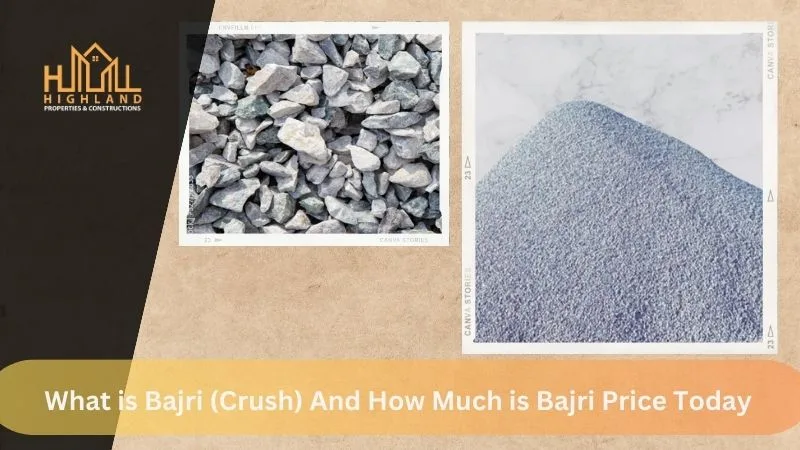
Know Your Construction Materials: What is Bajri (Crush) and How Much is Bajri Price Today
When you crush concrete, you break up big blocks of concrete into smaller, easier-to-handle pieces. In building projects, this method is often used to get rid of old or unwanted concrete and use it for something else. That’s how Crush (Bajri) is acquired.
Crush (Bajri)
It is one of the building material used in construction industry to build houses and other structures etc. Bajri means “Crush”. Crush (Bajri) is then again used along with cement and sand to make concrete and plaster walls. It is used in building the products the way one wants as per their requirements.
Official Source
Kirana hills at Sargodha and Margalla hills are the approved sources for aggregates within Pakistan.
Types of Crush (Bajri)
There are a lot of different kinds of Crush (Bajri) in Pakistan. They are used for a wide range of construction tasks, from mixing concrete to building roads. Following are the two types of crush that is used in Pakistan widely.
1. Sargodha crush
2. Margalla crush
Sargodha Crush
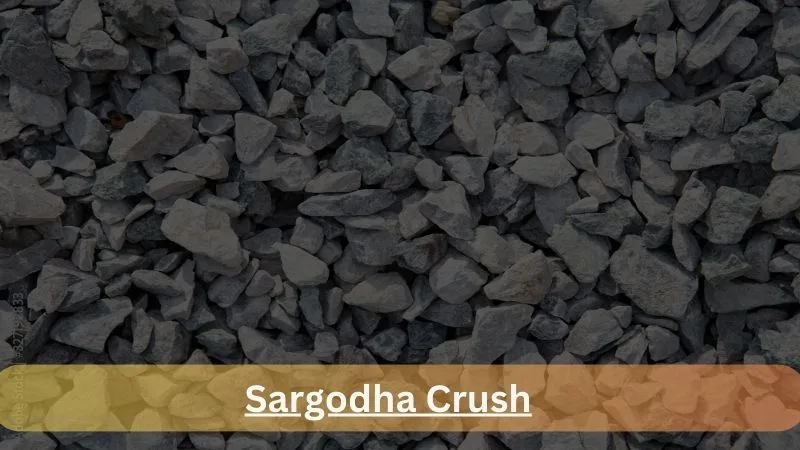
The physical properties of the constructed project were observed to be better where Sargodha crush was used. It has the following characteristics:
1. Particle Size
Most sargodha crush comes in different sizes. The most popular sizes are 19mm and 13mm. The chosen size depends on the building project and its size.
2. Durability
It is known for being long-lasting and giving the concrete mixture power. It helps that Sargodha crush is strong, which makes the buildings they support more durable.
3. Compactness
Crushed stone (Bajri) from Sargodha is famous for its ability to make concrete that is very thick and compact. This is very important for making sure the building’s structural stability and load-bearing capacity.
4. Void Reduction
Adding Sargodha crush (bajri), especially in bigger pieces, to concrete helps fill in the gaps between the stones. In the end, the structure is more tightly packed, which makes it stronger.
5. Suitability
Sargodha crush (bajri) is very popular in Pakistan’s construction business because it can be used for many things, like making foundations, road bases, and concrete structures.
6. Availability
This kind of crush comes from the Sargodha region in Pakistan and is easy to find on the local market. This makes it a good choice for building projects in the area because it is cheap and easy to get.
7. Adaptability
Sargodha crush is flexible and can be used in a variety of construction situations. It works well for projects ranging from making homes to improving infrastructure.
If you’re thinking about using Sargodha crush for a building project, you should think about what the project needs and talk to professionals to find the best size and quantity for the job.
Margalla Crush
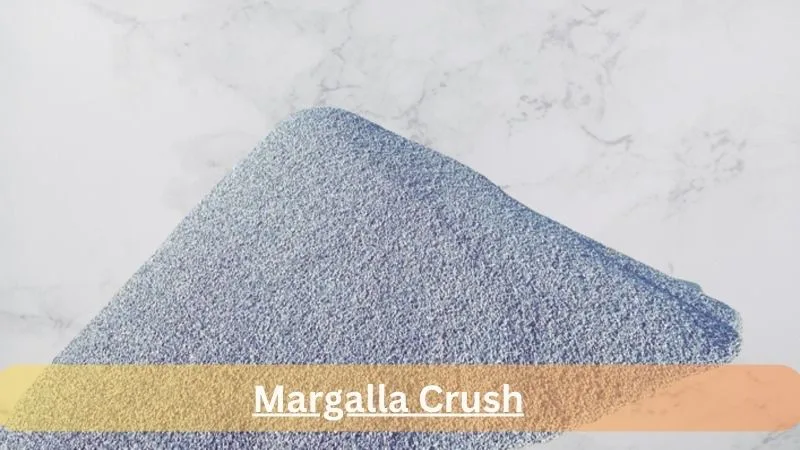
The mechanical features of concrete were better when it had more margalla aggregates in it for the constructional requirements.
1. Particle Size
Different sizes of margalla crush are available, but the most popular ones are 3/8 inch, 1/2 inch, and 3/4 inch. The choice of size relies on the constructional needs as well as the project requirement.
2. Durability
It is known that Margalla crush lasts a long time and gives the concrete mixture power and flexibility. This makes sure that the buildings will last a long time and stay stable.
3. Compactness
Just like Sargodha crush, Margalla crush is known for being able to make a concrete mix that is compact and thick. This feature is very important for making sure that the structure is strong and can hold excessive weight.
4. Void Reduction
Using Margalla crush in concrete mixtures helps fill in the gaps between the stones, making the construction stronger and dense.
5. Versatility
Margalla crush is flexible and can be used in a wide range of building projects. Because it is often used in foundations, road bases, and concrete buildings, it can be changed to fit the needs of any project.
6. Availability
This type of crushed stone comes from the Margalla Hills region in Pakistan and is easy to find on the local market. This makes it a good choice for building projects within Pakistan.
7. Adaptability
When it comes to building, margalla crush can be used in a variety of situations and is used in residential, commercial, and infrastructure projects.
When thinking about using Margalla crush for building projects, it’s important to think about what the project needs and talk to pros to find the best size and quantity needed accordingly.
Also Read: Know your construction materials: what Sand is and how much is Sand price today
Size of Crush (Bajri)
How strong something is can depend on the size of the crushed stones that are used to make it, like in making roads or houses. Concrete that has fewer holes between the stones is stronger when the stones are 19 mm or bigger. This makes the mixture more tightly packed, which makes it stronger and last longer.
Although, if you use 13mm stones, the concrete might not be as tightly packed because there are more spaces between the smaller stones. It might not change how strong the concrete is, but it might change how long it lasts.
When engineers and building professionals choose the size of crushed stones, they should keep the needs of each project in mind. You should think about how long the building needs to last, how much weight it needs to hold, and the weather it will be exposed to.
Stone crush comes in different sizes, and each size is used for different things. Most of the time, 7mm or 12mm is used to build houses.
Types of Aggregate
Types of aggregate used in Pakistan are Coarse aggregate (4.75mm) and fine aggregate (9.5mm).
1. Coarse Aggregate (4.7mm)
Coarse aggregate in concrete is made up of things like sand, surki, stone screens, burnt clays, cinders, fly ash, and more. Here are some other names for these things: gravel, rocks, clinkers, cinders, and brick chips, which are broken bricks.
2. Fine Aggregate (9.5mm)
Sand or small, broken stones that are less than 9.55 mm in diameter are often used as fine sediments. 20mm is the standard size of Bajri used in building. The bigger size, like 40 mm, is used in mass concrete, though. It also takes less cement and water to work with bigger aggregate pieces.
Density of Crush (bajri)
Crushed stone gravel 10 mm, 20 mm, and 40 mm would have densities of about 1,400 kg/m3, 1600 kg/m3, and 1700 kg/m3, respectively.
There are different sizes of crushed stone aggregate, so the quantity of the aggregate changes. Most of the time, 10mm, 20mm, and 40mm clumps weigh between 1.6 and 2.5 g/cm3.
Crush (Bajri) Usage in Construction
Following are some of the uses of Crush (Bajri) in Construction industry because of which it is an essential material in building.
1. To make Concrete
Crushed stone is an important part of making concrete. It is mixed with water, cement, and sand to make the material used for building things like slabs, supports, and structural elements etc.
2. Road Base
A base for roads and streets is often made of crushed stone. It gives stability and support, which helps make a strong base and long lasting ground.
3. Railroads
As ballast, crushed stone is used in railroad building to keep the tracks stable and let water drain away. It spreads the weight out and keeps the wheels from moving.
4. Foundation Support
Bajri is used to build the bases of houses and other structures. Because it is small, it can be used to make a solid floor that can hold the structure’s weight.
5. For Landscaping
In landscaping, crushed stone is used for driveways, paths, and as a decorative feature. To get a certain look, you can choose crushed stone that is a certain size or color.
6. Erosion Control
Keeping erosion at bay with retaining walls and hill stabilization are two ways that bajri is used. The stones help keep the ground from washing away and keep the scenery stable.
7. Drainage System
In order to build sewage systems, crushed stone is used. Because it is permeable, water can flow through it, keeping the ground from getting too wet and making sure draining works well.
Manufacturing Concrete Goods
Crushed stone is also used to make precast concrete goods, like pipes, blocks, and other building parts that are already made.
Price of Crush (Bajri) Today
The range of prices for Crush (Bajri) depends on its demand, its supply, where you buy it from and how good is the quality where it is being bought from.
| NO | Crush | Brand | Quantity | Per(CFT) |
|---|---|---|---|---|
| 1 | Margalla Crush | Margalla | 900 CFT/Trolley | 188 |
| 2 | Sargodha Crush A+ Class (2-Sooter) | Sargodha | 900 CFT/Trolley | 135 to 188 |
| 3 | Sargodha Crush A Class (2-Sooter) | Sargodha | 900 CFT/Trolley | 125 to 185 |
| 4 | Sargodha Crush B Class (2-Sooter) | Sargodha | 900 CFT/Trolley | 126 to 30 |
| 5 | Sargodha Crush C Class (2-Sooter) | Sargodha | 900 CFT/Trolley | 125 to 130 |
| 6 | Sargodha Crush A+ Class (3-Sooter) | Sargodha | 900 CFT/Trolley | 132 to 185 |
| 7 | Sargodha Crush A Class (3-Sooter) | Sargodha | 900 CFT/Trolley | 130 to 185 |
| 8 | Sargodha Crush B Class (3-Sooter) | Sargodha | 900 CFT/Trolley | 125 to 180 |
| 9 | Sargodha Crush C Class (3-Sooter) | Sargodha | 900 CFT/Trolley | 120 to 135 |
| 10 | Sargodha Crush A+ Class (4-Sooter) | Sargodha | 900 CFT/Trolley | 132 to 188 |
| 11 | Sargodha Crush A Class (4-Sooter) | Sargodha | 900 CFT/Trolley | 131 to 190 |
| 12 | Sargodha Crush B Class (4-Sooter) | Sargodha | 900 CFT/Trolley | 129 to 175 |
| 13 | Sargodha Crush C Class (4-Sooter) | Sargodha | 900 CFT/Trolley | 120 |
| 14 | Mix Bajar (Kacha) | Mix | Per CFT Price | 112 to 138 |
| 15 | Mix Bajar (Paka) | Mix | Per CFT Price | 112 to 137 |
| 16 | Saaf Bajar (1 inche-1.25 inches) | Saaf | Per CFT Price | 112 |
| 17 | Stone Dust (Khaka 0-0.5mm) | Khaka | Per CFT Price | 80 to 110 |
| 18 | WBM (Kacha) | WBM | Per CFT Price | 138 |
| 19 | Dina Bajar | Dina | 900 CFT/Trolley | 95 to 170 |
| 20 | WBM (Paka) | WBM | Per CFT Price | 137 |
Quantity of Crush (Bajri) to be Used
The quantity varies from project requirement and needs. For residential, it depends on one’s project size that could be 3 marla, 5 marla, 8 marla, 10 marla, 1 kanal, either with first and ground floor or with or without the basement etc.
Same goes for the commercial and industrial project scale size. Any competent team of expert would be able to tell an estimate depending upon various factors.
Competency
A skill is the specific ability to do a job. Competence, on the other hand, means that a person knows how to do the task correctly. Knowledge, experience, attitude, personality, and physical skills are also parts of competence.
It’s hard to define and set the criteria for what exactly the “competency” means as its subjective. But for starters though, you need to compare the training someone has had with the jobs they will be doing or have done, their knowledge and skills. In other words, their experience in the field.
For that, you can conduct a market research, short list the names of the companies you wish to get your quotations from for your construction project and visit them.
But ensure that the team you hire is competent and doesn’t end up just wasting your resources. Be it just the Cement or otherwise.
Always go for a professional. Lucky for you, we just happen to be one.
Why Experience Matters When Choosing Crush (Bajri)
Choosing the right crush is not only about finding the lowest price. The quality, size, quantity, and suitability of bajri can affect the strength and performance of concrete.
At Highland Properties & Construction, we bring 17+ years of experience in the construction industry. Over the years, we’ve worked on residential and commercial construction projects and understand how construction materials are selected and used at different stages of a project.
For homeowners, this experience can help when comparing different types and grades of crush. The right choice depends on the project requirements, concrete work, required quantity, and material quality.
If you’re planning construction in Lahore, it’s always better to discuss your material requirements with an experienced construction team before buying in bulk. This can help you avoid unnecessary material costs and make more informed decisions.
Summary
In this article, we have discussed about what Crush (Bajri) is and how many types does it have. Where is is sources from, the difference between Marghalla and Sargodha crush, its characteristics, its usage along with the various size it can be used as in different building projects and the price of Crush (bajri) today.
Bajri price today-FAQ’s
Q1: How many types of Crush (Bajri) are there in Pakistan that is being used?
A: 2 types, Marghalla Crush (bajri) and Sargodha Crush (Bajri)
Q2: Does bajri also has some classes?
A: yes, it can be classified in A class, B class and C class under the same brand be it Marghalla or Sargodha

Leave a Reply