

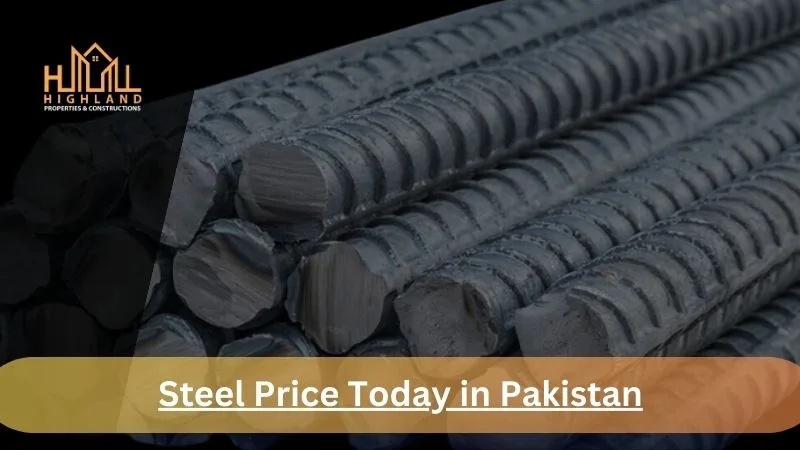
Know your construction materials: What is Steel, and how much is Steel price today?
Steel
It is an iron alloy that consists of Manganese(1%) and carbon (< 2%), along with small amounts of silicon, phosphorus, oxygen, etc. It is one of the world’s most important construction materials, and it is used in engineering and several projects of various magnitude, from residential to commercial to industrial to infrastructural, etc., because of its strength and fracture resistance.
Steel Vs. Metal
It is important to note that Steel and metal are not the same. Steel is an alloy, whereas metal is a naturally occurring chemical element used in building. Steel has a lower carbon content than iron, so it has an increased strength. It is more substantial than iron, as well. Steel is more malleable and doesn’t bend or deform over time. It is also a suitable replacement for metal in terms of construction, tools, building infrastructures, etc.
Metal has a wide range of elements with conductive properties, such as gold and aluminum, whereas Steel is an alloy comprised mainly of carbon and iron. Metals have been used since ancient times in many ways, from construction materials to jewelry. On the other hand, the invention of Steel led to significant improvements in buildings and weapons.
Also Read: Know your construction materials: what is Brick and how much is Brick price today in Pakistan
Steel price today
| Steel Iron Rod Size in Sutar/mm | 40 Grade Rate in KG | 40 Grade Rate in Metric Ton | 60 Grade Rate in KG | 40 Grade Rate in Metric Ton |
|---|---|---|---|---|
| 3 Sutar / 10mm | RS. 258 Per KG | RS. 258,000 / Metric Ton | RS. 262 Per KG | RS. 262,000 / Metric Ton |
| 4 Sutar / 12mm | RS. 260 Per KG | RS. 260,000 / Metric Ton | RS. 265 Per KG | RS. 265,000 / Metric Ton |
| 5 Sutar / 16mm | RS. 260 Per KG | RS. 260,000 / Metric Ton | RS. 265 Per KG | RS. 265,000 / Metric Ton |
| 6 Sutar / 20mm | RS. 260 Per KG | RS. 260,000 / Metric Ton | RS. 265 Per KG | RS. 265,000 / Metric Ton |
| 7 Sutar / 22mm | RS. 260 Per KG | RS. 260,000 / Metric Ton | RS. 265 Per KG | RS. 265,000 / Metric Ton |
| 8 Sutar / 25mm | RS. 260 Per KG | RS. 260,000 / Metric Ton | RS. 265 Per KG | RS. 265,000 / Metric Ton |
Types of Steel
Steel has been classified into four categories depending on its various properties and combination of other factors, which are as follows:
Carbon Steel
Stainless Steel
Alloy Steel
Tool Steel
1. Carbon Steel
Carbon steel is said to be unique because its makeup doesn’t have any other element. Its elemental nature makes it valuable. It is said to be robust and durable and used ideally in numerous ways. It contains carbon in 2% or less in its weight.
Sometimes, Carbon steel is said to be confused with cast iron. For it to be termed carbon steel, it must contain <2% carbon, whereas cast iron contains mainly 2% or 3.5% carbon in its makeup. Because of this, the rough texture and brittle effect in cast iron are evident.
Carbon steel is composed of alloyed metals but cannot be termed an alloy itself because of the lack of several other alloying elements.
90% of steel production comprises carbon steel because of its simplicity and durability. There are three types of carbon steel as follows:
Low Carbon
Medium Carbon
High Carbon
Low carbon
Low-carbon steel has a carbon level of—30% or less. This is the most popular type of Steel and costs the least. Manufacturers use low-carbon Steel to make lines, bolts, and pipes because they can bend when stretched.
Medium Carbon
This kind has a carbon level of between 0.31% and 0.60%, making it more potent but less flexible and more challenging to shape under pressure. Usually, gears and train tracks are made of medium carbon steel.
High Carbon
The most challenging type has more than 0.61% carbon and is often used to make building materials and very tough tools, like brick nails and trencher blades. They have no more than 2% carbon in them.
Because it is cheap and easy to work with, carbon steel is an excellent material for a wide range of construction projects, small or large.
2. Stainless Steel
This type is best known for being used to make medical devices and appliances. It can be used for more than just one’s home gas range. Chromium is the alloy that makes stainless Steel unique and gives it a distinctive shine.
Chromium has more usage than simply adding that “shine.” Its elemental properties contain oxidation resistance. It allows the metal’s increased longevity and prevents it from rusting away. Stainless Steel has chromium that ranges between 10.5% and 30%.
A metal with a higher chromium content shines brighter when cleaned and is less likely to rust. A lot of people mistake high chromium stainless steel for chrome. However, stainless Steel is not the same as chrome because it has chromium, nickel, and other metals mixed in with it. A producer adds a chromium layer to carbon steel (or another metal) to make chrome.
Another drastic difference is that chrome appears to be mirror-like, like chromium. Stainless steel applications are shiny and have lesser reflection capability due to adding other elements.
Varieties of stainless Steel are highly valued in the building industry for their strength and ability to resist corrosion. These are great for many building tasks and can store dangerous building materials.
It’s common to find stainless Steel in kitchen items, medical tools, and cars, but it’s also precious for other reasons. There are four types of stainless Steel, each used for a different thing. These types are as follows:
Martensitic Alloys
While martensitic metals are known for being tough, they are also prone to corrosion. A fast-cooling process is used to make these metals, which makes them perfect for medical tools, cutlery, and pliers.
Ferritic Metals
These are cheaper steels that don’t have much carbon or nickel. Ferritic metals are used in cars because they are strong and shiny because of the chromium in them.
Austenitic Metals
These alloys don’t conduct electricity or magnetism and have higher amounts of chromium and nickel, making them more corrosion-resistant. They are used in industrial kitchen appliances because they last a long time and are simple to clean.
Duplex Alloys
When austenitic and ferritic metals are mixed, a duplex alloy has the best qualities of both and is twice as strong. Because they have a lot of chromium, they are malleable and don’t rust. Instruments and pipes used in the gas, oil, and chemical businesses often are made of duplex alloys.
3. Alloy Steel
Alloy steel is said to have other elements which contribute to its final production and make it unique. Even though all the steels are alloys, carbon, and chromium are named based on the attributes they possess for the type of metals that are the result.
Alloy steel is a broad term for alloys with many qualities. A complicated alloy with many different elements makes shipping cases that last a long time.
People don’t usually think of silicon as a part of Steel, but because it is magnetic, it works well in most big machines. Aluminum can be used for many things, such as making new building materials that are light and strong.
Some elements that mix with iron and carbon to make alloys are also found in tool steels. For example, cobalt, tungsten, and molybdenum are tough hard metals sought after for their ability to cut and resist pressure.
Alloys are commonly used in many construction projects. Copper alloy and aluminum alloy have varieties that are popular for their low weight and heat-relevant properties.
Because alloy steel has many uses, it can be highly customized for specific needs. On the other hand, some alloys are costly because the extra elements used are less common than carbon or chromium. Some of its types are as follows:
Aluminum
It is a heat-resistant steel that is light, flexible, and easy to work with. It is often used in power sources and hot exhaust systems.
Copper
is a steel that doesn’t rust and moves heat very well, making it an excellent choice for factory electrical lines and heat exchangers.
Manganese
A very tough steel that doesn’t break easily when hit. It’s in high-strength safes, steel cabinets, and plates that don’t let people drill through them.
Molybdenum
This metal makes Steel that can be welded together, doesn’t rust, and works well under high pressure. This makes it suitable for building things underground or for oil and gas pipelines.
Silicon
soft Steel, can be shaped, and is very strong. Silicon is used to make strong magnets that power plants need for their transformers.
Vanadium
It is a high-impact steel that is shock and vibration-resistant. Vanadium is often needed for auto items like shocks and springs.
4. Tool Steel
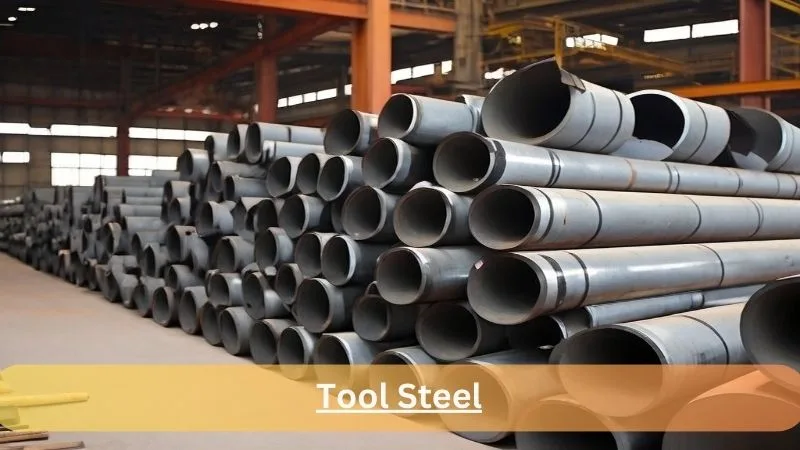
As the name suggests, tool steel is a type of high-carbon Steel used to produce tools like drills, saw blades, and tool bits. Mixing tool steel with other metals like tungsten, chromium, and vanadium makes it more robust, complex, and less likely to rust or wear down.
When you add high heat, let it cool quickly, and then heat it again; you temper it. This makes tool steel very hard and resistant to heat. Tool steels can handle rough surfaces and high-impact situations.
Tool steel has a lot of carbon. This makes it much more complicated than other kinds of Steel, which is essential for keeping a sharp cutting edge even after much use.
Different kinds of tool steel are needed to make tools. Tool steel can be used in various ways depending on the tool’s needs. The uses it works best for will depend on the added extra features. Following are some of its types:
Air hardening
This Steel can be heated to very high temperatures without changing shape due to its high chromium content.
Water-hardening
This Steel is water-quenched during use, used to make standard tools, and is the most affordable tool steel.
Oil hardening
Knives and shears are made from this oil-quenched Steel, which is very immune to wear from slipping.
High-speed
High-speed Steel is rough and doesn’t break easily when hit. It’s in power saws and drill bits.
Hot-Working
This Steel can handle very high temperatures and is used for shaping and casting.
Shock-resistant
This Steel is hardened by small amounts of carbon, silicon, and molybdenum, making it suitable for punches and welding tools.
Grades of Steel
Which type of business you buy from can make all the difference when you’re looking to purchase Steel, whether for a new building or machinery.
As a buyer, you must know about the different kinds of Steel and how they work. People who want to buy Steel should know about the three main types: carbon (C), alloy (A), and stainless Steel (S).
Different grades are available within these groups based on things like purity level. Here is a list to help you decide what to buy next. Commonly used steel grades that are thought to be the best of each type are:
| Steel Category | Steel Grades | Common Uses |
|---|---|---|
| Alloy Steels | 4140, 4150, 4340, 9310, 52100 | Shafts, gears, automotive parts, bearings, heavy machinery |
| Stainless Steels | 304, 316, 410, 420 | Kitchen equipment, construction, food processing, medical equipment |
| Tool Steels | D2, H13, M2 | Cutting tools, molds, dies, punches, industrial tooling |
Note: These steel grades remain widely used in Pakistan and international markets. Availability may vary by manufacturer, supplier, and region.
Properties of Steel
Steel has the following properties that make it a popular choice in the construction industry:
1. Weldability
2. Machinability
3. Conductivity
4. Corrosion resistance
5. Hardness
6. Ductility
7. Durability
8. Elongation
9. Tensile strength
10. Workability
11. High strength
12. Low weight
13. Corrosive resistance
Measuring unit
Often, Steel is priced by hundredweight (CWT), which costs 100 pounds of material. Carbon steel prices may be shown per pound in some places, like materials market data. Tons are also often used as units (1 ton = 2,000 pounds).
Usage in the Construction sector
Steel in roads, houses, and other structures. Over half of all the Steel used in the world goes to construction, making it one of the most essential businesses. Steel strengthens buildings, from homes and parking lots to schools and skyscrapers. Steel can also be used for roofs and the outside of walls.
Steel is widely used in infrastructure, transportation, machinery, metal tools, etc. In addition to it, it’s cost-effective, more vital, portable, versatile, and recyclable.
Steel industry in Pakistan
3.30 billion tons Pakistan’s steel business has grown significantly over the years. In 2019, Pakistan’s steel business comprised about 600 smaller and larger mills that could make 3.3 million tons of Steel. This amount of steel production equals 0.18 percent of the world’s total.
Top companies
The following are some of the top steel companies in Pakistan that one can consider in construction for their project, residential or otherwise.
1. Agha
2. Amreli Steels
3. Mughal Steel
4. Pakistan Steel Mills
5. Aisha Steel
6. Ittehad Steel
7. Peoples Steel Mills Ltd
8. Amaan Steels
9. Ittefaq steel
10. FF Steel
11. KB Steel
12. Abbas Steel Group
13. AF steel
14. Bari engineering
15. Frontier Foundry Steel Private Limited
16. Kamran Steel
17. Model Steel
18. Naveena Steel
19. Pakistan Cables
20. Qh private limited
21. Rafflesia Industries
Branded Steel Price Today
| Brand Name | 40 Grade Rate in KG | 40 Grade Rate in Metric Ton | 60 Grade Rate in KG | 60 Grade Rate in Metric Ton |
|---|---|---|---|---|
| Agha | RS. 264 / KG | RS. 264,000 / Metric Ton | RS. 268 / KG | RS. 268,000 / Metric Ton |
| Amreli Steels | RS. 266 / KG | RS. 266,000 / Metric Ton | RS. 270 / KG | RS. 270,000 / Metric Ton |
| Mughal Steel | RS. 265 / KG | RS. 265,000 / Metric Ton | RS. 269 / KG | RS. 269,000 / Metric Ton |
| Pakistan Steel Mills | RS. 258 / KG | RS. 258,000 / Metric Ton | RS. 262 / KG | RS. 262,000 / Metric Ton |
| Aisha Steel | RS. 270 / KG | RS. 270,000 / Metric Ton | RS. 274 / KG | RS. 274,000 / Metric Ton |
| Ittehad Steel | RS. 264 / KG | RS. 264,000 / Metric Ton | RS. 268 / KG | RS. 268,000 / Metric Ton |
| Peoples Steel Mills Ltd | RS. 259 / KG | RS. 259,000 / Metric Ton | RS. 263 / KG | RS. 263,000 / Metric Ton |
| Amaan Steels | RS. 261 / KG | RS. 261,000 / Metric Ton | RS. 265 / KG | RS. 265,000 / Metric Ton |
| Ittefaq steel | RS. 262 / KG | RS. 262,000 / Metric Ton | RS. 266 / KG | RS. 266,000 / Metric Ton |
| FF Steel | RS. 265 / KG | RS. 265,000 / Metric Ton | RS. 270 / KG | RS. 270,000 / Metric Ton |
| KB Steel | RS. 257 / KG | RS. 257,000 / Metric Ton | RS. 261 / KG | RS. 261,000 / Metric Ton |
| Abbas Steel Group | RS. 260 / KG | RS. 260,000 / Metric Ton | RS. 264 / KG | RS. 264,000 / Metric Ton |
| AF steel | RS. 263 / KG | RS. 263,000 / Metric Ton | RS. 267 / KG | RS. 267,000 / Metric Ton |
| Bari engineering | RS. 258 / KG | RS. 258,000 / Metric Ton | RS. 262 / KG | RS. 262,000 / Metric Ton |
| Frontier Foundry Steel Private Limited | RS. 259 / KG | RS. 259,000 / Metric Ton | RS. 264 / KG | RS. 264,000 / Metric Ton |
| Kamran Steel | RS. 260 / KG | RS. 260,000 / Metric Ton | RS. 264 / KG | RS. 264,000 / Metric Ton |
| Model Steel | RS. 266 / KG | RS. 266,000 / Metric Ton | RS. 271 / KG | RS. 271,000 / Metric Ton |
| Naveena Steel | RS. 264 / KG | RS. 264,000 / Metric Ton | RS. 269 / KG | RS. 269,000 / Metric Ton |
| Pakistan Cables | RS. 269 / KG | RS. 269,000 / Metric Ton | RS. 274 / KG | RS. 274,000 / Metric Ton |
| Qh private limited | RS. 257 / KG | RS. 257,000 / Metric Ton | RS. 261 / KG | RS. 261,000 / Metric Ton |
| Rafflesia Industries | RS. 257 / KG | RS. 257,000 / Metric Ton | RS. 261 / KG | RS. 261,000 / Metric Ton |
Ratio to be used in construction
This precise information depends on the nature, size, structural design, and finishing factors, as well as one’s budget, how much Steel will be used in what ratio, and which elements are needed to form the desired project. However, A competent team of experts in the construction field can give you an estimate.
Competency
A skill is the specific ability to do a job. Competence, on the other hand, means that a person knows how to do the task correctly. Knowledge, experience, attitude, personality, and physical skills are also parts of competence.
It’s hard to define and set the criteria for what “competency” means as subjective. For starters, you need to compare the training someone has had with the jobs they will be doing or have done with their knowledge and skills. In other words, their experience in the field.
For that, you can conduct market research, shortlist the names of the companies from which you wish to get quotations for your construction project, and visit them.
But ensure that the team you hire is competent and uses your resources effectively. Be it just the Cement or otherwise. Always go for a professional. Lucky for you, we happen to be one!
Our Services
Highland Properties and Constructions has a track record of giving excellent and unmatched results in terms of construction projects for more than the past decade.
Our vision is about transparency, value generation, and exceeding our customer’s expectations in every manner that matters.
In addition to that, once we have someone on board, we are a team for them and have their back. Our cooperation and understanding go a long way with our clients. For more details, you can go through our portfolio. Also, here’s a link to what our clients say about us in the long run.
Summary
In this article, we have discussed what Steel is, the types of Steel that can be used in construction or for something else, some of the grades and properties of Steel, the scope of the steel industry in Pakistan, and the top companies one can think of to get the Steel from.
FAQ’s
Q: Which brand of Steel is the best in Pakistan?
A: Amreli Steels Limited.
Q: What grade of Steel is used in Pakistan?
A: Grade 60
Q: How is steel price determined?
A: Many things affect the price of Steel, such as the production, supply, and demand for Steel in the domestic and international markets.

Leave a Reply